
Definition
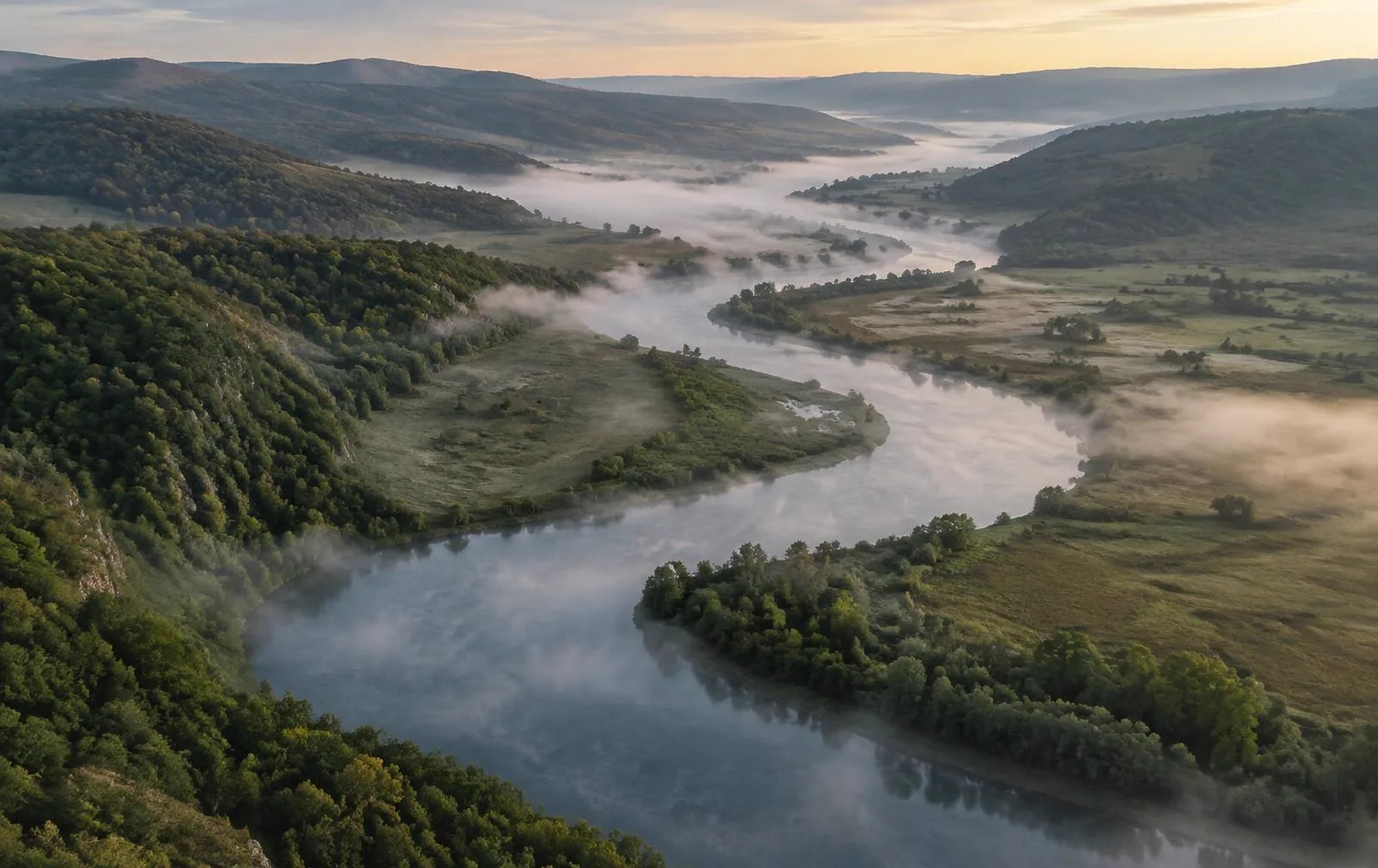
A watershed is the area of land that drains rain and snowmelt into a shared body of water, such as a stream, river, lake or wetland. Every point on land sits inside one watershed or another, and the boundaries are set by topography rather than by political lines. Ridges and high ground divide one watershed from the next, so a drop of rain falling on one side of a hill may end up in a different river system than a drop falling a short distance away. Watersheds nest inside each other. A small creek has its own small watershed, and that creek's watershed is part of the larger watershed of the river it joins. Understanding these boundaries is the first step in understanding where water comes from and where it goes.
How water moves
Water moves through a watershed in a continuous cycle. Precipitation falls on forests, fields, streets and rooftops. Some of it soaks into the soil and replenishes groundwater, some is taken up by plants and released back into the air, and some runs across the surface into channels that join larger streams. The condition of the land determines how fast and how clean that movement is. Intact soil and vegetation slow water down, filter it and store it. Pavement and compacted ground do the opposite, sending water quickly into drains and channels. Groundwater also feeds streams between storms, which is why many rivers keep flowing during dry weeks. The path water takes across a watershed shapes both its quality and its timing.
Pollution sources
Because everything on the land is connected to the water downhill, pollution in a watershed rarely stays in one place. Fertilizer and animal waste from farms can wash into streams and carry excess nutrients downstream. Oil, salt and litter from roads and parking lots move with storm runoff. Industrial sites, aging pipes and failing septic systems can add contaminants to groundwater or surface water. Even eroding soil counts as pollution when it clouds waterways and smothers habitat. These sources are often described as either point sources, which come from a single identifiable discharge, or nonpoint sources, which are spread across the landscape. Nonpoint pollution is harder to trace and usually requires changes in land management rather than a single fix at a single pipe.
Who is affected
Everyone who lives in a watershed is affected by what happens upstream, and everyone affects those downstream. Communities that draw drinking water from rivers or reservoirs depend on the condition of the land those rivers drain. Farmers rely on predictable flows for irrigation, and fisheries depend on clean, cool water and intact stream habitat. Flooding is also a watershed issue, since development that speeds runoff in one place can raise flood risk in another. The effects are not distributed evenly. Neighborhoods near industrial corridors or aging infrastructure often face higher exposure to contamination, and rural communities may have fewer resources to treat polluted water. Watershed health is therefore both an environmental question and a question of fairness.
What protects it
Protecting a watershed generally means protecting the land that filters and stores its water. Forested buffers along streams shade the water, stabilize banks and trap sediment before it reaches the channel. Wetlands absorb floodwater and filter pollutants. Thoughtful land use planning keeps the most sensitive areas, such as steep slopes and floodplains, from being paved or cleared. On farms, practices like cover cropping and careful fertilizer timing reduce what washes away. In towns and cities, green infrastructure such as rain gardens and permeable surfaces lets water soak in where it falls. Because watersheds cross jurisdictional lines, effective protection usually requires cooperation among neighboring communities, and many regions coordinate through shared watershed plans and monitoring programs.